Wednesday , 9 September 2026
  • Students explore research careers at 4th Aquaculture Research Talk

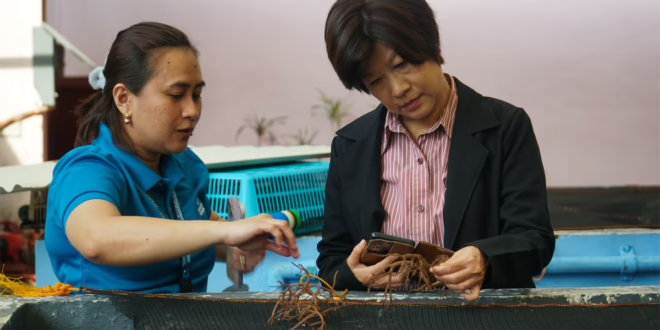
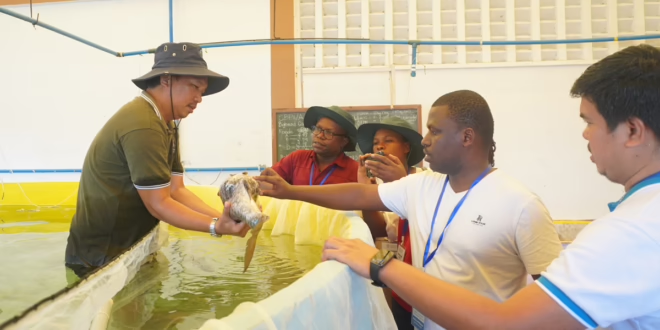
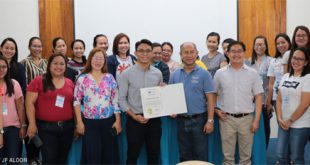
    Students from different regions of the Philippines gathered for the 4th Aquaculture Research Talk held on 6 July 2026 at SEAFDEC/AQD Tigbauan Main Station, Iloilo to gain valuable insights from researchers and scientists while exploring career opportunities in research. A total of 125 participants, composed of university and senior high school students along with several … …

  • SEAFDEC/AQD inaugurates $1.4 million hatchery facilities to strengthen aquaculture production

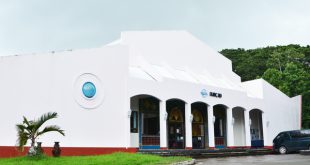
    SEAFDEC/AQD inaugurated three facilities on 9 July 2026 at its Tigbauan Main Station, marking a PHP 87-million (USD 1.4 million) investment in research, production, and technology transfer efforts for whiteleg shrimp, giant freshwater prawn, and mangrove crab. The PHP 50-million (USD 820,000) Whiteleg Shrimp Hatchery and Grow-out Complex is the largest of the three projects. … …

  • SEAFDEC/AQD celebrates 53 years with community-oriented activities

    As part of its week-long 53rd anniversary celebration, SEAFDEC/AQD organized environmental stewardship, community outreach activities. The celebration kicked off on 3 July 2026 with a coastal cleanup at Barangay Buyu-an, Tigbauan, Iloilo, where SEAFDEC/AQD’s Main Station is located. A total of 229 SEAFDEC/AQD employees, on-the-job trainees, and volunteers participated in the cleanup, collecting approximately 600 … …

  • From Pond Mud to Breakthrough: Aquaculture’s Newest Worm Ally 

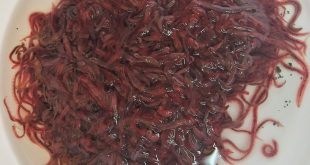
    Most people would not expect a scientific breakthrough to emerge from pond mud. But in 2017, a routine culture experiment at SEAFDEC/AQD in Iloilo took an unexpected turn. Then researcher Dr. Mary Anne Mandario stocked culture tanks with jelly cocoons, the egg capsules of mudworms, and expected little more than another round of observations. Instead, … …

More News

A hard problem with a soft solution: Catfish farm’s production surges after easy fix

There are not enough catfish in the “Catfish Country” of Zarraga, Iloilo, but recent findings in one farm may just be the catalyst that could catapult the fish into abundance. Zarraga Pantat Fingerlings was one of the many farms struggling to keep pace with buyers’ demands while itself suffering from many catfish eggs that fail to hatch and catfish fry that die before they can be sold to other farmers that grow them in ponds.     Larry Pañoso, the hatchery operations in-charge, said that they achieved a breakthrough in January when  their production reached an all-time high of 500,000 fry per week after the Southeast Asian Fisheries Development Center Aquaculture Department (SEAFDEC/AQD) helped resolve a problem with their water …

Read More »

Priority Infrastructure Updates 2021

SEAFDEC/AQD is nearing the completion of two multi-species hatcheries and a milkfish broodstock facility at its research complex in Tigbauan, Iloilo. These priority infrastructure projects are being built to intensify demonstration and techno-transfer programs, as well as to help address the shortage of aquaculture seeds in the Philippines, the host country of the research center.

Read More »

Community-based sea ranching: fisherfolks’ legacy to sustainable fisheries

Just off Molocaboc Island, beneath a turquoise canopy of water, fishers search the coral reef to pick out abalone and sea cucumber, two prized delicacies in Asian cuisine. Live abalone sells abroad for up to $120 or approximately P5,700 a kilo, and dried sea cucumber, $2000 or about P96,000 a kilo. But the fishers are not here to cash in on the abalone grazing on coralline substrates and the sea cucumber burrowing in the white sand. Not yet. They carefully weigh and size them, log the numbers in a notebook, and return them to the reef to continue to grow and reproduce. During the formative years of the sea ranching project, the fisherfolks asked when they will benefit from the …

Read More »

Profiles in Science: Peter Palma and the Case of Serendipity

Being a scientist was never part of his career plan, but this young researcher is already making waves in aquaculture research with his award-winning study on the giant grouper, a “threatened” fish locally known as lapu-lapu. Peter Palma and his team recently bagged the prestigious Dr. Elvira O. Tan Awards – Outstanding Published Paper in the Aquatic Science Category for their paper that studied the sexual development of the hermaphrodite fish and debunked presumed norms on the origin of the male giant grouper. Their paper titled “Reproductive development of the threatened giant grouper Epinephelus lanceolatus,” published in the Aquaculture Journal last July 2019, presented evidence that male giant grouper do not need to pass through a female stage at an earlier …

Read More »
Translate »